Achievements and Challenges of Gender Equality ODA Projects for Expanding Women's Political Participation in Mongolia
Date 2026.03.13
Under the vision of "Realizing a gender-equal society where rights are guaranteed without discrimination," the Korea International Cooperation Agency (KOICA) has been promoting its Mid-term Strategy for Gender Equality (2021-2025). As part of this initiative, the Korea Institute for Development Strategy (KDS) conducted the performance management services for the "KOICA-UNDP Project for Strengthening Women's Empowerment to Achieve Gender Equality in Public Decision-Making in Mongolia" from 2021 to 2024.
This project, implemented by the UNDP Mongolia Country Office with KDS overseeing performance management, stands as the first and only women's empowerment project among KOICA's gender equality initiatives. It supported legal and institutional improvements, capacity building, and awareness-raising activities aimed at expanding women's political participation in Mongolia.
Outcomes of the 2024 Mongolian General Election
The achievements of this project became tangibly visible during the 9th Mongolian General Election held in June 2024. Out of a total of 1,336 candidates, 518 (39%) were women. Among the 126 elected members, 32 were women, recording a female parliamentary representation of 25.4%—the highest in Mongolia's history.
This success was driven by the 2023 constitutional and electoral law amendments made by the Mongolian Parliament, which mandated proportional representation and a gender quota. Specifically, Clause 2 of Article 30 of the Election Law codified a 30% female candidate quota for the 2024 general election.
International Conference on Sharing Gender Equality Project Results
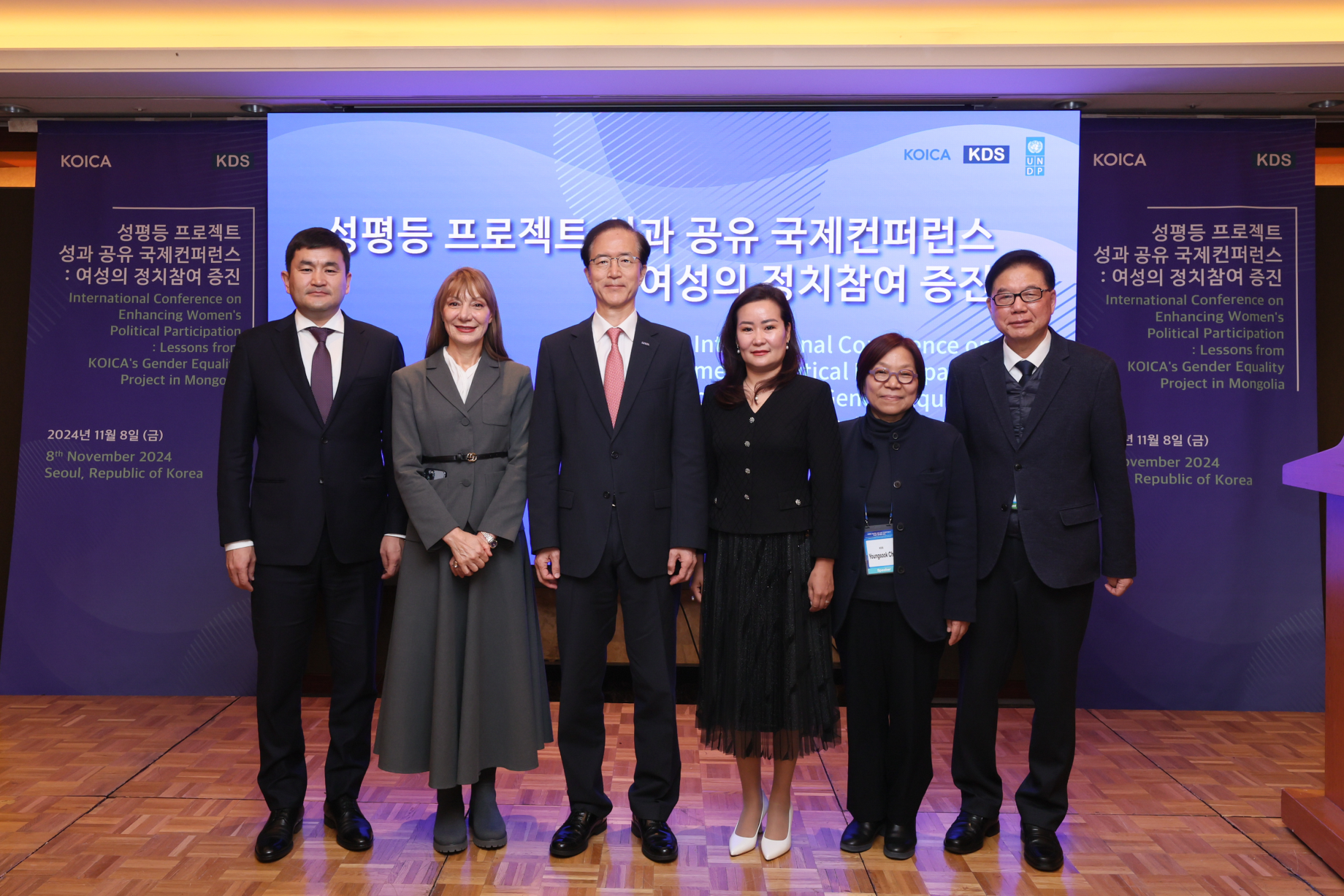
To share these project achievements with the international community and seek cooperation for achieving SDG 5 (Gender Equality), the "International Conference on Sharing Results of KOICA Gender Equality Projects" was held on November 8, 2024, at the Lotte Hotel in Seoul. Hosted by KOICA and organized by KDS, the conference was attended by approximately 140 experts and stakeholders both in-person and online.
Key participants included KOICA executives, the Resident Representative of UNDP Mongolia, and officials from the National Committee on Gender Equality (NCGE) of Mongolia.
-
Morning Session: Featuring a keynote speech by Professor Mona Lena Krook of Rutgers University, a leading scholar in women and politics, gender experts from KOICA, USAID, and UNDP headquarters shared global strategies for promoting women's political participation.
-
Afternoon Session: Detailed results and lessons learned from the KOICA-UNDP Mongolia project were presented.
Ms. Matilda Dimovska, Resident Representative of UNDP Mongolia, evaluated the support for this gender equality project as highly effective. Director Lee Yun-young of KDS remarked in the opening address, "There is still a long way to go to become a fair society where women can freely and equally participate in political and economic decision-making," emphasizing the need for continuous efforts.
The project received significant attention for its multifaceted approach—improving political systems, strengthening the capacity of female politicians, and enhancing voter awareness. It is expected to serve as a meaningful reference case for future projects aimed at expanding women's political participation in other countries beyond Mongolia.
To ensure the significance and effectiveness of this project continue through the 2028 general election, sustained interest and commitment from Mongolia, Korea, and the international community, including the UNDP, are essential.
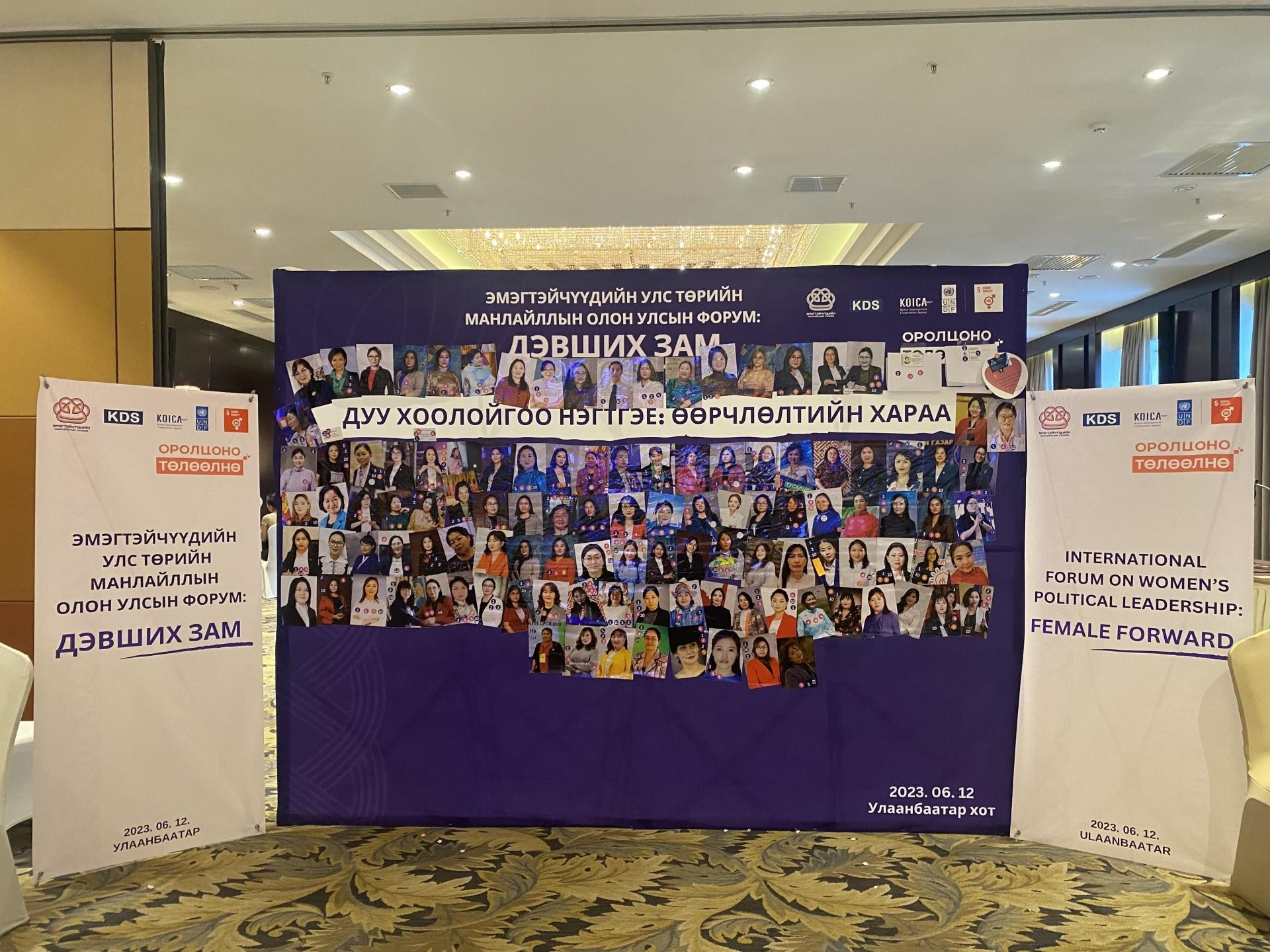
▲At the Korea-Mongolia Conference held in June 2023, female candidates agreed on the "Top 10 Policy Agendas for Women's Solidarity."
The image shows a large wall with the slogan "Unite for Change!"
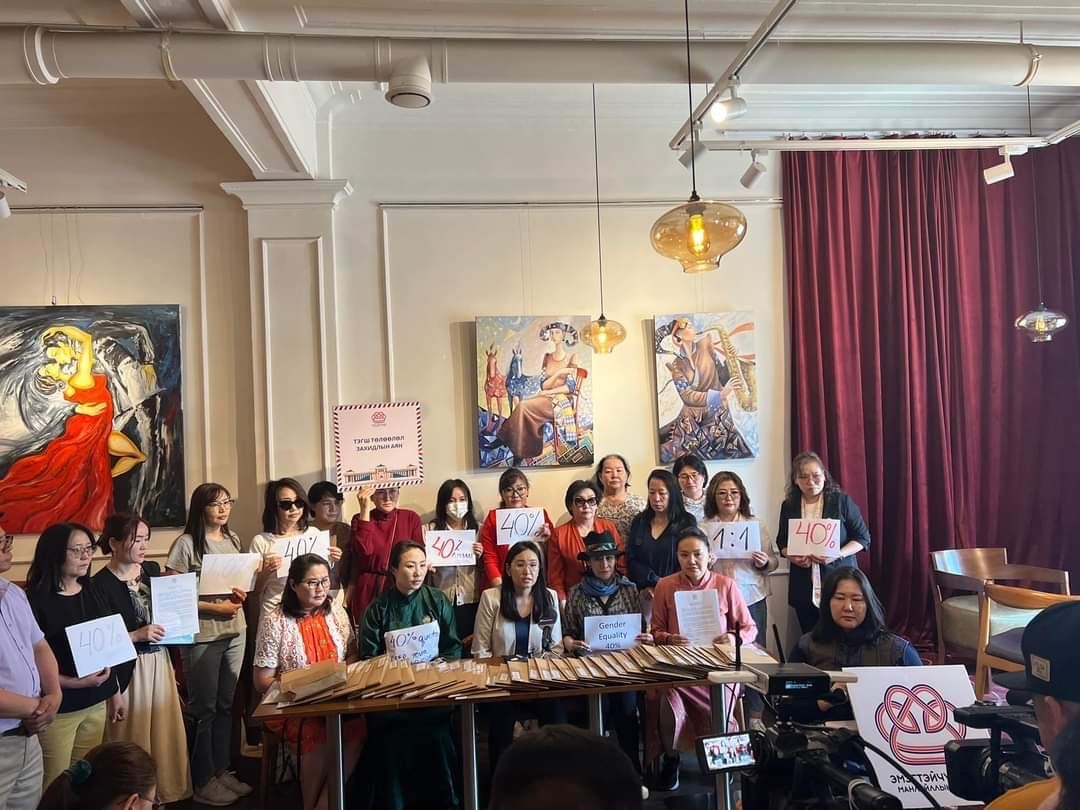
▲A press conference for the "Voter Letter Delivery Campaign" held near the Parliament the day after the June 2023 conference.
Approximately 3,000 letters were collected to advocate for the passage of the gender quota and the achievement of a gender-equal parliament.