
Inception Survey for the ‘Project for Inclusive Rural Community Development in Bardiya District, Nepal’
Date 2026.02.24
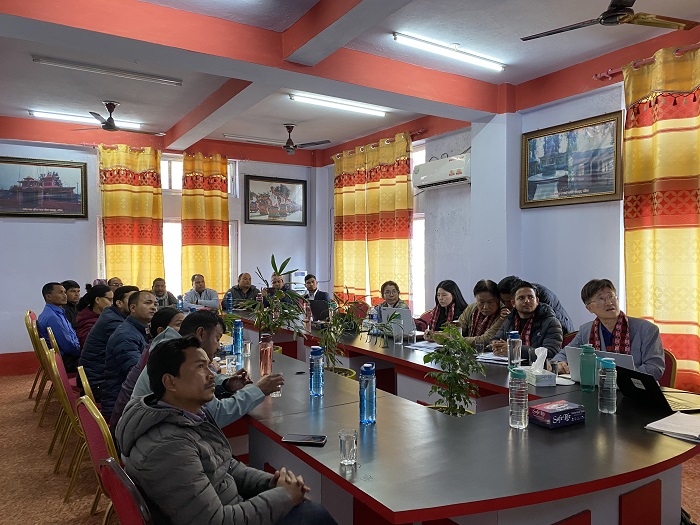
KDS announced that it completed the inception survey for the "Project for Inclusive Rural Community Development in Bardiya District, Nepal (2024-2029 / $8 million)" on February 1. This project is supported as part of the grant aid initiative by the Korea International Cooperation Agency (KOICA).
As the second phase following KOICA’s previous rural community development project in Nepal (2016-2022), this initiative will implement Locally Initiated Projects (LIPs) across four key sectors—commercial agriculture, livestock, dairy, and eco-tourism—in seven municipalities within the Bardiya district of Lumbini Province. The project is scheduled to run from 2024 to 2029 with a total budget of $8 million.
Nepal, a landlocked country in South Asia, is approximately two-thirds the size of the Korean Peninsula and is home to about 30.55 million people. With more than 65% of the total population engaged in agriculture, there is a continuous increase in demand for improved agricultural productivity. Specifically, the Bardiya district, located in the Terai region (the low-lying plains of southwestern Nepal), is known as a representative food production hub. However, it faces challenges such as low agricultural productivity and weakened competitiveness against Indian agricultural products, necessitating systematic rural development.
The implementing consortium, KDS-GEH Consulting, dispatched a team of six experts, led by Mr. Yoon Hae-jin, Director of the International Agricultural Development Division at Korea Institute for Development Strategy (KDS), to the Bardiya region from January 20 to February 1. The mission aimed to conduct baseline surveys, assess development needs, and establish a project implementation plan. The delegation visited the Ministry of Federal Affairs and General Administration (MoFAGA) to discuss the project launch, held public hearings at seven municipal offices in Bardiya, and conducted in-depth interviews with local stakeholders, including mayors, ward chairpersons, cooperatives, and farmer organizations.
Through this project, the consortium plans to build a community-led sustainable rural model and implement rural development projects to revitalize the local economy. Furthermore, by strengthening the capacities of cooperatives and farmer organizations, the project aims to establish a foundation for self-reliance among residents and contribute to the long-term development of Nepalese agriculture.
Mr. Kong Moo-heon, Country Director of the KOICA Nepal Office, remarked, “This project will be an excellent opportunity to disseminate Korea’s rural development knowledge and technology to Nepal. Based on the lessons learned from the first phase, we expect to achieve even greater results in the Bardiya district.”
LINK : https://www.gokorea.kr/news/articleView.html?idxno=821964
